Comparing Graphics Capabilities Across Popular Consoles
10 December 2025
Let’s be honest—gaming these days is as much about jaw-dropping visuals as it is about storylines, gameplay mechanics, or multiplayer chaos. Whether you’re chasing down enemies in a first-person shooter or navigating vast open worlds, graphics play a huge role in how immersive your experience feels. But with so many gaming consoles on the market, how do they really stack up when it comes to raw graphical horsepower? Do all consoles serve the same visual feast, or does one serve filet mignon while the others offer cheeseburgers?
In this article, we’re diving deep into the graphics capabilities of today’s most popular gaming consoles: the PlayStation 5, Xbox Series X, and Nintendo Switch. So, grab a snack, sit back, and let’s break down the pixel-packed battleground.
What Makes Console Graphics Tick?
Before we dive into specifics, let’s cover the basics. When we’re talking about graphics in gaming, we’re mainly looking at three big factors: resolution, frame rate, and graphical features (like lighting, textures, and shadows). Think of resolution as the sharpness of the image—more pixels mean clearer details. Frame rate measures how smooth everything looks. And graphical features are, well, the cherry on top, bringing realism to life with ray-traced lighting or ultra-detailed character models.Modern consoles rely on cutting-edge hardware, like GPUs (graphics processing units) and RAM, to pull off these visual stunts. But not all consoles are built equally. Let’s see how each contender fares.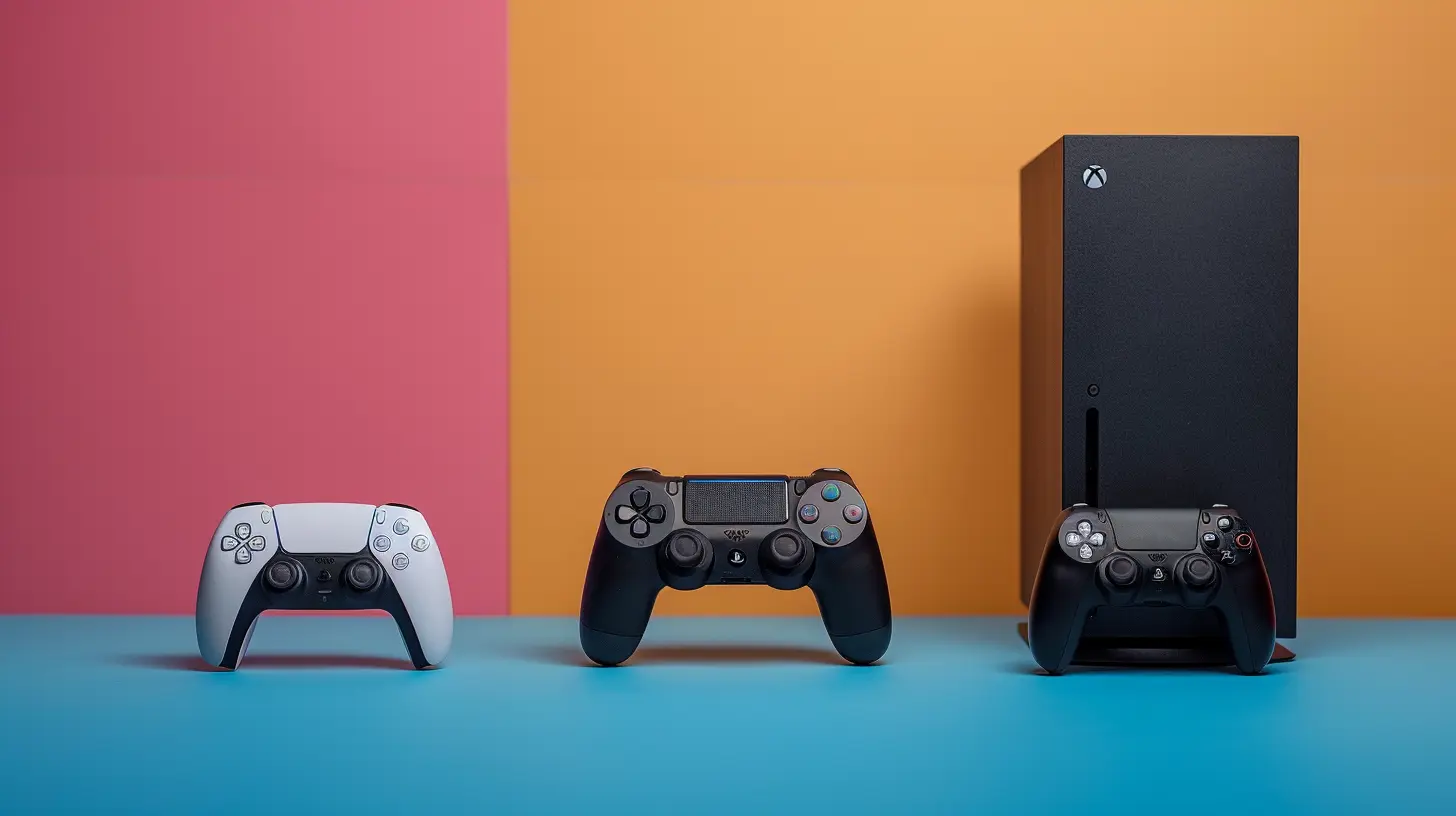
PlayStation 5: The Visual Showstopper
Everyone knew the PlayStation 5 was going to be a powerhouse the second Sony pulled back the curtain on it. Packed with a custom AMD RDNA 2 GPU capable of 10.28 teraflops (that’s tech-speak for how much computational power it has), the PS5 is built for eye-popping visuals.4K at Its Finest
The PS5 is designed to handle 4K gaming, with support for up to 120 frames per second (FPS). If you’ve got a 4K TV, games like Ratchet & Clank: Rift Apart or Horizon Forbidden West will make your jaw hit the floor. These games showcase vibrant worlds with ultra-realistic lighting, thanks to ray tracing. It’s like stepping into a Pixar movie, but you’re the star.Ray Tracing and Beyond
Ray tracing is one of the PS5’s standout features. If you’ve ever been mesmerized by how light bounces off metal or ripples across water in a game, that’s ray tracing in action. It adds layers of realism that weren’t even possible a few years ago.However, not all games prioritize visuals. Some developers choose performance modes that favor higher frame rates over maxing out graphical fidelity. This is perfect for fast-paced games where buttery-smooth motion matters more than counting the individual strands of hair on a character’s head.
Xbox Series X: The Raw Powerhouse
Next up is the Xbox Series X, Microsoft’s flagship console. If the PlayStation 5 is a Ferrari, the Xbox Series X is a Lamborghini—both ridiculously fast and powerful, but catering to slightly different drivers.Most Powerful Console Ever?
Microsoft boldly claims the Xbox Series X is the “most powerful console ever.” With 12 teraflops of GPU power (beating the PS5 on paper), it’s certainly got the muscle. Where the Xbox shines is in sheer consistency—it delivers native 4K gaming across a wider range of games, often maintaining higher resolutions compared to its Sony rival.High Frame Rates Galore
The Series X prioritizes performance, with many games offering 120 FPS modes alongside 4K visuals. It’s tailor-made for competitive gamers who value speed and smoothness. Imagine the difference between running on a treadmill set to a steady pace versus sprinting full-speed—it just feels more dynamic.Backward Compatibility and FPS Boost
One of the Series X’s secret weapons is how much love it gives to older games. Thanks to backward compatibility and features like FPS Boost, you can revisit classics from the Xbox One or 360 eras—now running smoother and sharper than ever. Nostalgia never looked so good.
Nintendo Switch: The Underdog with a Twist
Ah, the Nintendo Switch—a console that’s not even trying to compete in the same league as the PS5 or Xbox Series X when it comes to raw graphical power. But before you write it off, remember this: Nintendo has always played by its own rules.Portable Gaming with Compromises
The Switch’s hardware is downright modest compared to the other two giants. It uses an NVIDIA Tegra X1 chip, which is more in line with a beefy smartphone than a next-gen monster. This means no 4K, no ray tracing, and no 120 FPS. Instead, most Switch games run at 1080p in docked mode and 720p in handheld mode, with frame rates hovering around 30 FPS.Art Style Over Realism
But here’s the twist: Nintendo doesn’t need cutting-edge hardware to make games look amazing. Take The Legend of Zelda: Breath of the Wild, for example. It’s not hyper-realistic like Call of Duty, but its vibrant art style and breathtaking landscapes are unforgettable. The Switch excels at delivering unique, whimsical designs that stick with you long after you’ve powered down.Where the Switch Shines
The Switch’s strength lies in versatility. It’s a hybrid console—play it on your big screen or take it to bed. Sure, it’s not melting your eyeballs with graphics, but its library of engaging, stylistically distinct games like Mario Kart 8 Deluxe and Animal Crossing: New Horizons more than makes up for it.Comparing Specs Side by Side
So, how do these consoles square up when you lay their specs out on the table? Let’s break it down:| Console | GPU Power | Max Resolution | Max Frame Rate | Special Features |
|---------------------|-----------------|----------------|----------------|------------------------------|
| PlayStation 5 | 10.28 teraflops | 4K (up to 8K for media) | 120 FPS | Ray tracing, DualSense controller |
| Xbox Series X | 12 teraflops | 4K (up to 8K for media) | 120 FPS | FPS Boost, Game Pass integration |
| Nintendo Switch | ~1 teraflop | 1080p docked | 60 FPS (rare) | Portability, exclusive games |
Which Console Wins the Graphics Battle?
So, which console is the king of graphics? Well, it depends on what you’re looking for.- If you crave next-gen visuals: Go with the PlayStation 5 or Xbox Series X. They both deliver stunning 4K experiences, but the Xbox might edge out slightly if raw horsepower is what you care about.
- If you value versatility: The Nintendo Switch is in a class of its own. It’s not about raw power but rather about convenience and a library of unforgettable games.
- If you love competitive gaming: Xbox Series X's focus on high frame rates makes it a solid choice.
At the end of the day, it comes down to personal preference. Are you about the eye candy? Or do you care more about innovative gameplay?
The Future of Gaming Graphics
What’s next in the world of console graphics? Well, with AI-driven upscaling, improvements in ray tracing, and even cloud gaming pushing boundaries, the future looks ridiculously bright. We’re talking about games that could blur the line between reality and digital environments. Buckle up, because the ride’s just getting started.Final Thoughts
Comparing graphics capabilities across consoles isn’t just about numbers on a spec sheet—it’s about how those numbers translate to your gaming experience. Each console brings something different to the table. The PlayStation 5 and Xbox Series X are flexing their muscles like boxers in a ring, while the Nintendo Switch is off to the side, quietly creating its own magic.At the end of the day, no matter which console you choose, one thing’s for sure: the graphics in today’s games are better than they’ve ever been. And for us gamers, that’s a big win.
all images in this post were generated using AI tools
Category:
Gaming ConsolesAuthor:

Whitman Adams
Discussion
rate this article
3 comments
Camille Bass
Great article! It’s insightful to see how different consoles handle graphics. I’d love to see a deeper dive into how these graphics capabilities affect gameplay experience and performance, as well as potential future improvements in upcoming console generations. Keep it up!
April 19, 2026 at 4:34 PM
Whitman Adams
Thanks for the feedback! I appreciate your interest and will consider exploring those aspects in future pieces. Stay tuned!
Caroline Clark
Great analysis! It’s fascinating to see how the latest consoles stack up in terms of graphics capabilities. The differences between them can significantly enhance the gaming experience. Looking forward to seeing how these advancements influence future game development! Keep up the good work!
December 16, 2025 at 4:44 AM
Whitman Adams
Thank you! I appreciate your insights and enthusiasm for the evolving gaming landscape. Stay tuned for more updates!
Maya McAlister
Great article! It's always fascinating to see how different consoles handle graphics. Your insights help gamers make informed choices. Can't wait to see more comparisons and discussions on this topic in the future!
December 11, 2025 at 5:21 PM
Whitman Adams
Thank you for your kind words! I'm glad you found the article helpful. Stay tuned for more comparisons and discussions!