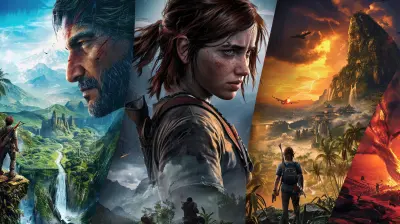
How Games Handle Character Development
23 December 2025
Character development in video games isn’t just about leveling up, unlocking gear, or choosing skill trees—it’s about creating connections. Whether we’re guiding a hardened warrior through epic battles or a reluctant hero finding courage, character development in games breathes life into storytelling. In movies, character arcs are told through dialogue and visuals. But in games? We live them. We are them. Let’s dive into how games handle character development and why it’s become such a vital part of immersive gameplay.
What Is Character Development in Games?
Before we dig deep, let’s clear up what we mean by “character development.” In gaming terms, it’s the journey a character takes—emotionally, physically, and mentally—throughout the course of a game.Sure, it can refer to stat growth and skill upgrades. But the magic really happens when a character’s personality, beliefs, or relationships shift over time based on their experiences—the same way people change in real life. Good character development creates that “wow” moment at the end of a game where you realize you're not just finishing a story; you’re closing a chapter in someone’s life.
Why Character Development Matters in Games
Let’s face it: even the flashiest graphics and tightest gameplay can feel hollow if we don’t care about the characters. Great development:- Builds emotional investment – The more we know and understand a character, the more we care about what happens to them.
- Drives narrative – A character growing or adapting often becomes the backbone of the story.
- Enhances player agency – When we make choices that affect a character’s path, it gives us a personal stake in their journey.
So, character development isn’t just storytelling fluff—it’s core to the gaming experience.
Main Approaches to Character Development in Games
Let’s break down the different ways games build their characters. Some methods are traditional; others push the envelope. But combined, they’re what makes us remember these virtual people long after we’ve logged off.1. Linear Character Arcs
In linear narratives, the protagonist usually follows a single, pre-planned arc. Think The Last of Us or God of War (2018). These games use scripted events and dialogue to show how characters grow.Take Joel from The Last of Us. At the start, he’s emotionally closed off. Over time, his bond with Ellie cracks that shell. You’re not choosing who Joel becomes—you’re watching it unfold. That’s powerful storytelling.
#
Pros:
- Strong, cinematic storytelling- Controlled pacing and emotional beats
#
Cons:
- Less replay value- Limits player impact
2. Choice-Based Development (Branching Narratives)
Games like Mass Effect, The Witcher 3, and Detroit: Become Human give you choices that shape not only the story but the characters themselves. You decide whether your character is merciful or ruthless, loyal or selfish. These choices sculpt their personality and relationships.It’s like being a co-writer in a TV series where your decisions matter. Cool, right?
#
Pros:
- High replayability- Deeper emotional involvement through personal agency
#
Cons:
- Writing and consequences can feel shallow if not well-executed- Risk of decision fatigue
3. Role-Playing and Stat-Based Growth
While stat progression doesn’t look emotional, it often connects to a character’s development. In RPGs like Elden Ring or Dark Souls, your avatar becomes stronger not just numerically, but symbolically. Surviving brutal worlds shapes you—both as a player and character.Sure, these games don’t throw heavy dialogue at you. But by grinding through hardship, you’re living the character’s journey. It’s subtle but meaningful.
#
Pros:
- Immersive skill-based roles- Symbolic development through gameplay mechanics
#
Cons:
- Emotional depth often left to interpretation- Less focus on dialogue-driven personality changes
4. Environmental and Indirect Development
Sometimes, it’s the world—not cutscenes or dialogue—that tells a character’s story. Games like Hollow Knight, Journey, or Inside use atmosphere and interaction to suggest growth.In Journey, for instance, your character doesn’t speak a word. But through exploration and visual storytelling, you feel their spiritual evolution. It’s like reading a poem instead of a novel—gentle, interpretive, and personal.
#
Pros:
- Unique, minimalist storytelling- Encourages player reflection
#
Cons:
- Can be too ambiguous for some- Less character clarity
5. Relationship and Companion Dynamics
Ever notice how your relationships in a game can change you? In Red Dead Redemption 2, Arthur Morgan’s interactions with the camp influence his moral compass and emotional depth. Similarly, your companions in Dragon Age or Persona 5 help shape your journey.These dynamics are gold. Watching a gruff outlaw become a protective brother figure because of his relationships? That’s some top-tier storytelling.
#
Pros:
- Rich interpersonal evolution- Emotional growth through dialogue and interaction
#
Cons:
- Relies heavily on side content- Requires time investment to feel impactful
Player Impact: How Your Decisions Shape Character Growth
One of gaming’s superpowers is interactivity. Unlike books or movies, players become the character. This opens the door to super-personal development arcs.In Life is Strange, for example, your choices as Max shape her relationships, her guilt, and her courage. You’re not just controlling Max—you are Max. That connection turns digital characters into extensions of ourselves.
When games get this right, the emotional payoff is next-level.
Games That Nailed Character Development
Let’s highlight a few examples where character development absolutely stole the show.1. Arthur Morgan – Red Dead Redemption 2
Arthur starts as a loyal outlaw blindly following Dutch. But as the gang begins to crumble and he questions his morals, he develops depth, humanity, even redemption. Whether you play him honorably or not, his transformation is unforgettable.2. Geralt of Rivia – The Witcher 3
Geralt’s no blank slate. He’s gruff, wise, and sarcastic—but your choices mold him. Does he protect Ciri like a father or leave her to her fate? Is he diplomatic or brutal? That’s up to you. Either way, he grows based on your moral compass.3. Ellie – The Last of Us Part II
Ellie’s descent into vengeance and emotional turmoil is painful to witness—but it’s intentional. Her arc forces players to confront uncomfortable truths about revenge, trauma, and loss. She changes… and not always how we’d want. That’s what makes it real.4. Commander Shepard – Mass Effect Series
Whether you play Paragon or Renegade, Shepard’s choices ripple across galaxies. Allies live or die, wars are won or lost, all depending on how you develop the character over three games. Talk about legacy.How Games Use Mechanics to Support Development
Gameplay mechanics aren’t just for fun—they can reflect and reinforce growth.- Leveling systems: Reflect skill mastery and learning
- Dialogue trees: Show emotional maturity or instability
- Weapon choices: Symbolize ethical values (non-lethal vs lethal)
- Moral alignment meters: Track internal conflict or consistency
The best games integrate these elements seamlessly, so your character’s arc isn’t just told—it’s played.
Challenges in Character Development
Not every game nails it, though. Some common hurdles include:- Lack of player impact: When your choices don’t really matter, development falls flat.
- Over-reliance on archetypes: Copy-paste heroes with no nuance kill immersion.
- Poor writing or pacing: Development that’s too sudden or forced feels fake.
Character development works best when it’s subtle and consistent—like a plant slowly growing through cracks in the pavement. You don’t always notice it happening until you stand back.
The Future of Character Development in Games
With tech evolving (thank you, AI and procedural storytelling), we’re close to seeing dynamic characters that react uniquely based on thousands of player actions. Imagine a game where no two players experience the same character arc.Add to that the rise of mental health narratives, moral ambiguity, and social issues, and it's clear character development is only getting deeper and more meaningful.
Storytelling is no longer just about heroes and villains—it’s about identity, empathy, and connection.
Final Thoughts
At its core, character development in games is about creating meaning. Whether through choices, dialogue, or progression, it transforms flat avatars into living, breathing people we care about.It’s what makes us cry when a companion sacrifices themselves. It’s what makes us cheer when a coward finds their courage. And it’s why, long after we’ve moved on to new games, these characters stay with us—tattooed on our minds.
Because in games, we don’t just watch the story. We live it.
all images in this post were generated using AI tools
Category:
Gaming ReviewsAuthor:

Whitman Adams
Discussion
rate this article
2 comments
Oriana Roberson
What a fantastic read! Your insights into character development in games beautifully highlight the emotional connections we form with characters. It’s fascinating to see how different techniques enhance storytelling and player engagement. Thanks for sharing these valuable perspectives—can’t wait to see more articles like this! Happy gaming!
December 28, 2025 at 5:57 AM
Whitman Adams
Thank you so much for your kind words! I'm glad you enjoyed the article and found the insights valuable. I appreciate your support and look forward to sharing more soon! Happy gaming!
Nico Duffy
Character development in games is like leveling up in life—full of unexpected twists! From heroic arcs to villainous backstories, it’s always a blast watching characters grow. Here’s to the power-ups that make our virtual pals unforgettable!
December 24, 2025 at 5:14 AM
Whitman Adams
Absolutely! Character development in games mirrors life's journey, introducing surprises that enhance our connection to these virtual beings. It's fascinating to see how their growth shapes our experience. Thanks for sharing your thoughts!