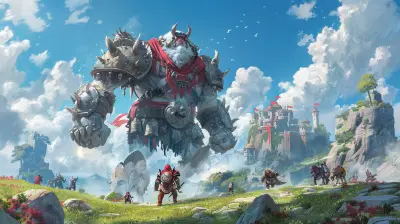
Why This Indie Game Is Outshining AAA Titles
12 January 2026
In a world dominated by massive marketing budgets, jaw-dropping CGI trailers, and billion-dollar publishing deals, you’d think AAA games have the whole gaming world on lock. But guess what? An unassuming indie game with no celebrity endorsements, no multimillion-dollar ads, and a fraction of the team is stealing the spotlight. Crazy, right?
So, what’s going on here? How can an indie game—made by a handful of passionate developers in their spare time—end up being more loved, respected, and talked about than a AAA blockbuster with all the bells and whistles?
Grab your controller (or keyboard and mouse), because we’re about to dive into why this indie gem is beating the big boys at their own game.
What Is a AAA Game vs. an Indie Game?
Before we get too deep, let’s get on the same page.- AAA games: These are the Hollywood movies of gaming. Huge teams. Sky-high budgets. Years in the making. Think Call of Duty, Battlefield, Assassin's Creed. They're polished, high-stakes, and often play it safe.
- Indie games: These are the garage bands of the industry. Smaller teams—sometimes even one person—limited budgets, and truckloads of creativity. Think Hollow Knight, Stardew Valley, Celeste.
And somehow, despite the odds, indie games are not just surviving—they’re thriving.
The Secret Sauce: Creativity With No Chains
Ever notice how a lot of AAA games feel... familiar?Sure, they look different. Maybe there's a different setting, a new character, or some extra buttons to press. But the core gameplay? Often recycled. Why? Because big publishers like safe bets. They want returns. They want formulas. They want to sell millions and avoid risks.
Indie developers? They’ve got nothing to lose. And that’s their superpower.
Because they’re not answering to shareholders or strict design boards, they can take risks. They can tell weird stories, create unique mechanics, break all the so-called “rules” of game design—and that’s where the magic happens.
Look at games like:
- Undertale – A game where you can finish the entire thing without killing anyone? That was unheard of at the time.
- Papers, Please – A dystopian border-patrol simulator that somehow tugs at your heartstrings?
- Hollow Knight – An epic Metroidvania with tight controls and deep storytelling, polished to perfection by a tiny indie studio.
These games didn’t just follow a trend—they created new ones.
Heart Over Hype: The Power of Passion
Here’s a hot take: indie games feel more human.When you’re playing an indie title, you're often experiencing the direct vision of the developers. It’s not a product—it’s a passion project.
You can feel it in the writing. You can see it in the hand-drawn art. You can hear it in the soundtrack. Everything just feels more... real.
AAA studios, on the other hand? They're like big corporations building games by committee. And while they can be technically impressive, they sometimes lack soul.
Indie devs pour their hearts into every pixel. And players notice.
Community, Not Customers
Have you ever tried giving feedback to a AAA developer?You’d be lucky to get noticed in a sea of Reddit threads, Discord chats, and Twitter @s.
Now try sending an email or tweeting at an indie dev. There’s a good chance they’ll actually respond. Maybe even thank you. Indie game communities are often tight-knit, supportive, and incredibly active.
That connection? It makes all the difference.
Players stick around not just because the game is good—but because they feel part of something special. They share fan art. They create mods. They talk about the game like it’s a close friend.
Performance Over Polish
Sure, indie games aren’t always as graphically intense as their AAA counterparts.But while AAA titles might invest millions into making realistic hair physics, indie games focus on what really matters—gameplay.
Let’s be real. Would you rather have some fancy 4K reflections or a game that’s actually fun to play?
Indie games are often optimized better, load faster, and require way fewer system resources. That means more people can play them—on low-end PCs, on the Steam Deck, even on Switch.
With AAA titles ballooning in size, demanding SSDs, and still launching with bugs, indie games stand out by just... working.
One Game To Rule Them All: The Indie That’s Doing It Bigger Than AAA
Let’s talk specifics.Take a game like “Hades” by Supergiant Games. It’s not just a great indie game—it outperforms many AAA games in nearly every area:
- Gameplay? Tight, responsive, and endlessly replayable.
- Story? Deep, emotional, and refreshingly nonlinear.
- Art and Music? Absolutely stunning.
- Bugs? What bugs?
It won multiple Game of the Year awards and was praised by critics and players alike. And it didn’t take a billion dollars to make.
Hades isn’t the exception. It's part of a growing pattern where indie games are being nominated alongside (and even beating) AAA titles in this golden age of gaming.
The Price is Right
Let’s talk money.A AAA game costs $70 these days. And let’s be honest—it often comes with microtransactions, season passes, deluxe editions, and day-one DLC.
Meanwhile, indie games typically go for about $10–$30. And ironically, they often offer more value. No shady monetization. No nickel-and-diming. Just a complete experience from start to credits.
Plus, indie games go on sale often. You can sometimes grab absolute gems for the price of a fancy coffee.
The Rise of Streaming and Virality
Another unfair advantage indie games have? Viral potential.Twitch, YouTube, and TikTok have completely changed how games get discovered. A unique indie title with quirky mechanics or a surprising twist can explode overnight.
Remember how “Among Us” blew up years after its launch? Just one stream and—boom—it became a global phenomenon.
AAA games rely on massive marketing. Indie games rely on word of mouth—and honestly, that might be more powerful in today’s digital world.
Gaming Freedom: No Handholding, No Nonsense
AAA games often feel like a guided tour.Go here. Do that. Watch this cutscene. Complete 12 fetch quests. Watch another cutscene.
Indie games? They treat the player with respect. They drop you into the world and say, “Figure it out.” They’re not afraid to challenge you. They encourage experimentation, exploration, and discovery.
And for a lot of gamers, that’s way more satisfying than being babysat.
Indie Doesn’t Mean Inferior
If you’ve been sleeping on the indie scene, now’s the time to wake up.Indie developers are some of the hardest-working, most creative minds in the gaming world. They’re making games filled with charm, depth, and innovation—and they’re doing it without a mega budget or a brand name.
And while not every indie game is a masterpiece (let’s be honest, some are pretty rough), the best ones offer unmatched experiences that no AAA game dares to attempt.
When Big Studios Take Notes
You know the tide's turning when even big studios start copying indie game mechanics.- Roguelike elements in mainstream games? That’s thanks to indie hits like Dead Cells and The Binding of Isaac.
- Retro pixel art styles? Once considered outdated, now a premium aesthetic choice.
- Hardcore permadeath mechanics? Once niche, now featured in major franchises.
Indie games are no longer just the underdogs—they’re the trendsetters.
Final Thoughts: A David vs. Goliath Story
Let’s not pretend AAA games are bad. They’re not. Some are absolutely fantastic and worth every penny.But the gaming landscape is shifting. And more than ever, players are valuing innovation, authenticity, and creativity over cinematic flair and brand loyalty.
That indie game you overlooked in your library? It might just be your next favorite.
So next time you’re scrolling through the store, don’t just look at the top sellers or the familiar franchises. Give that quirky indie title a shot. You might be surprised at just how much heart it holds—and understand exactly why it's stealing the limelight from the corporate giants.
all images in this post were generated using AI tools
Category:
Gaming ReviewsAuthor:

Whitman Adams
Discussion
rate this article
2 comments
Lorelei Patel
Great read! It's inspiring to see how indie games can capture hearts in ways big titles sometimes miss. Their creativity and passion truly shine through. Excited to check out this gem!
January 18, 2026 at 3:46 AM
Whitman Adams
Thank you! I'm glad you found it inspiring. Indie games really do have a unique magic that resonates deeply with players!
Grant McGarvey
Indie creativity surpasses AAA's formulaic approach!
January 17, 2026 at 4:19 PM
Whitman Adams
Thank you! Indie games often prioritize innovation and unique storytelling, allowing them to push boundaries and resonate with players in ways AAA titles sometimes don't.