Why Some Games Hook You and Others Don’t
26 March 2026
Let’s be real—there are those games you pick up for a quick 15-minute session... and suddenly, it’s 3 AM, you’re halfway through a pizza you don’t remember ordering, and you’re telling yourself "just one more level." Then there are others you boot up once, stare blankly at the loading screen, and never touch again. So, what’s the deal? Why do some games suck you in like a black hole while others just fizzle out?
Buckle up, gamer friend, because we're diving deep into what makes certain games irresistible and why some others just miss the mark entirely.
The Hook Factor: More Than Just Graphics
We often think eye-popping graphics or big-budget marketing are what make a game successful, but let’s not be fooled by the shine. Engagement goes way deeper. It’s about the "hook"—that magical combo of design, mechanics, and storytelling that grabs your brain and won’t let go.Think of it like a great TV show. The pilot has to be just good enough to keep you watching. If a game doesn’t get its hooks in early, it risks getting uninstalled faster than you can say "first boss fight."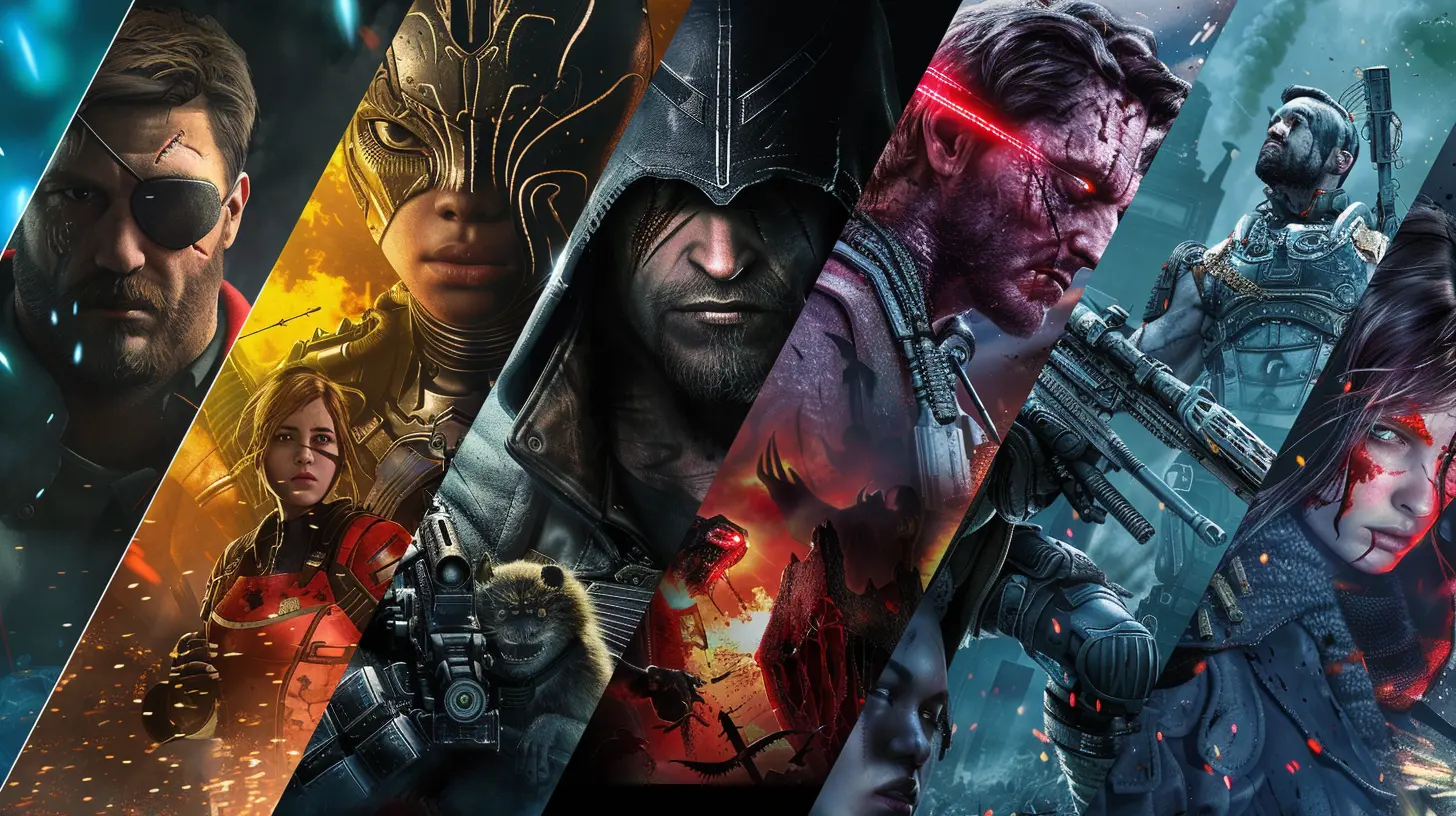
1. Game Mechanics: The Heartbeat of Any Good Game
Alright, let’s start with the soul of any game—its mechanics. Ever played a game that just “feels right”? That’s because its controls and systems are so well-designed that your brain doesn’t have to think twice.Take something like Rocket League. You know it’s just car soccer, right? But the controls are buttery smooth, the gameplay loop is tight, and improvement actually feels satisfying. You wanna keep playing because every time you do, you get a bit better—and that’s addictive.
Now contrast that with a clunky third-person action game where the camera fights you every step of the way. No matter how amazing the story might be, if playing it feels like a chore, it won’t last long on your hard drive.
Feedback Loops Keep You Coming Back
One mechanic that makes or breaks a game? Feedback loops. Games like Stardew Valley or Animal Crossing are masters of the positive feedback loop. You plant a crop, it grows, you harvest it, you get rewards, and then you do it all again—with just enough progress to feel like you’re doing something meaningful.
2. Storytelling: Making You Care
Ever notice how some games hit you right in the feels while others leave you cold? That’s narrative power, baby. A compelling story doesn’t just add flavor—it drives engagement.Story-driven games like The Last of Us, Red Dead Redemption 2, or even Undertale keep players glued because they make you care about the characters. You’re not just pushing buttons—you’re emotionally invested. You laugh, cry, rage, and cheer with them. And that emotional connection? That’s what keeps you up ‘til sunrise.
On the flip side, a game with poor storytelling, shallow characters, or an incoherent plot can feel like watching a bad soap opera. You might tolerate it for a while, but eventually you’ll peace out.
Emerging vs. Linear Narratives
Some games (Skyrim, Minecraft) let you create your own stories. These emergent narratives are player-driven and deeply personal. Others, like God of War or Final Fantasy, offer a more scripted, narrative-driven experience. Both styles can hook players—but only if done right.
3. Progression Systems: Give Me That Dopamine Hit!
Let’s not pretend — you and I both love a good XP bar. We’re wired to chase progress. Unlocking abilities, leveling up, earning gear—it gives us a tangible sense of achievement.Well-designed progression systems feed you rewards at just the right pace. Not too fast (or it feels cheap), not too slow (or it feels like a grind). Games like Hades, Borderlands, or Diablo III nail this balance. They keep you coming back for "just one more run" or "one more boss" because each playthrough feels like a step forward.
Poorly tuned systems, though? They feel grindy, repetitive, and straight-up boring. When progress stalls or feels meaningless, interest drops off fast.
4. Flow State: That Sweet Spot Between Challenge and Skill
Ever been so zoned into a game that you lose track of time, your snack’s gone cold, and your phone’s on 12 missed calls? Congrats, you’ve hit the flow state—a psychological sweet spot where challenge and skill are in perfect harmony.Games like Celeste, Dark Souls, or Tetris are masters of crafting this experience. They’re tough, sure—but fair. And beating them feels earned. That little hit of triumph? It’s like a high.
However, if a game’s too easy, it gets boring. Too hard, and it’s frustrating. The magic happens right in the middle—and only the best games manage to live in that space.
5. Player Agency: Let Me Do What I Want!
You ever play a game that makes every little choice feel meaningful? Or better yet, gives you freedom to do things your way?That’s player agency—the ability to affect the game world through your choices. Games like Mass Effect, Baldur’s Gate 3, or The Witcher 3 give players a real sense of control. Your dialogue choices, moral decisions, and even combat styles shape your experience.
Now compare that to a heavily scripted game with no player input. You’re basically on rails, and after a while, it stops feeling like a game and more like a chore.
6. Social Connectivity: Gaming’s Secret Sauce
Let’s not ignore the multiplayer magic. Sometimes, it’s not the game itself but who you’re playing it with that keeps you hooked.Games like Fortnite, Among Us, or Call of Duty aren’t just popular because of gameplay—they offer shared experiences. They let you trash-talk your friends, cooperate under pressure, or just hang out and build virtual castles.
Even single-player experiences can have a social dimension. Think Reddit theories, Twitch streams, and YouTube walkthroughs. A game that sparks community discussion is one that lives longer.
7. Polish & UX: If It Feels Bad, It Is Bad
Let’s not underestimate good polish. A game can have stellar concepts but if it launches buggy, crashes, or has menus straight from hell? Yeah, players will bounce.Things like intuitive UI, smooth load times, and bug-free gameplay matter. First impressions are crucial. Games like Breath of the Wild or Hollow Knight feel like they’re made with love. Every UI element, every animation—it all just works.
Compare that to a janky cash-grab mobile game with 10-minute energy timers, and… bleh. You’re outta there.
8. Emotional & Intellectual Rewards
Some games tap into your brain in unique ways. Puzzle games like Portal 2 or story mysteries like Her Story keep you hooked not by action, but with cleverness.Alternatively, games can be emotionally rewarding. Think of the bittersweet ending of Life is Strange or the quiet melancholy of Journey. If a game moves you or makes you think, it becomes unforgettable.
9. Monetization: Don’t Be Greedy
Here’s the elephant in the room: microtransactions. If a game constantly nags you to spend money, it breaks immersion.Free-to-play games can be awesome (Genshin Impact, Warframe), but the ones that pile on pay-to-win or manipulative monetization? They turn players off quick.
Fair monetization respects the player. It doesn’t shake you down like a shady street vendor for that next loot box.
Why Replays Matter
A game that’s truly great doesn’t just hook you once—it makes you want to replay it. Maybe it’s to uncover secrets. Maybe it’s for achievements. Or maybe it’s just that the gameplay loop is that addictive. Replayability keeps a game alive long after its release.Games like Skyrim, Hades, or Slay the Spire are endlessly replayable because they’re designed with surprises and depth at every turn.
The Intangible X-Factor
Sometimes, all the mechanical pieces are in place, but a game still flops. Why? Because there’s no “X-Factor.” It’s the strange, almost magical mix of creativity, passion, and vision that breathes life into a game.You can't always put your finger on it, but you know when a game has it. It's the difference between loving a game and just tolerating it.
Final Thoughts: It’s All About the Feel
At the end of the day, the games that hook us are the ones that make us feel something—or better yet, many things. Whether it’s the thrill of victory, the agony of defeat, the joy of storytelling, or the satisfaction of mastery, the best games understand how to tap into our emotions and attention spans.It’s not about having the prettiest graphics or the biggest world. It’s about meaningful gameplay, compelling design, and keeping that human connection alive—both in-game and outside it.
Because let’s face it: when a game is truly great, it’s not just a game. It’s an experience.
all images in this post were generated using AI tools
Category:
Gaming ReviewsAuthor:

Whitman Adams
Discussion
rate this article
2 comments
Quentin Mendoza
Games are like snacks—some are crunchy delights that keep you munching, while others leave a weird aftertaste. Let's dive into this flavor-packed gaming buffet!
April 2, 2026 at 2:50 AM
Whitman Adams
Absolutely! Just like snacks, the appeal of games varies greatly—some captivate and engage, while others fall flat. Let's explore what makes certain games irresistible!
Zevin Hodge
Great article! It’s fascinating to explore what makes certain games addictive while others fall flat. Your insights shed light on player engagement—looking forward to seeing more discussions on this topic! Keep up the fantastic work!
March 30, 2026 at 4:33 AM
Whitman Adams
Thanks for your kind words! I'm glad you found it interesting. I look forward to sharing more insights on player engagement soon!