Balkanize The Video Game Industry
August 8, 2026 - 02:02

A bold new voice in game development is calling for the complete fragmentation of the industry. Instead of a few dominant platforms, publishers, and storefronts, the developer envisions a landscape where dozens of smaller, independent ecosystems thrive side by side. The idea is not to unify but to shatter. "I want this industry to just shatter into a million beautiful shards that all have their own heroes, their own things, their own structures, their own funding methods," they said.
This is not a call for simple indie support. It is a rejection of the current model where a handful of corporations control distribution, discoverability, and even the definition of success. The developer argues that the homogenization of games, driven by the need to appeal to the largest possible audience, has flattened creativity. When every major release must fit into a narrow mold to justify its budget, the medium loses its edge. The result is a market full of safe sequels and live-service clones, where risk is punished and novelty is a liability.
The proposed alternative is messy. It would mean regional scenes with their own payment systems, niche platforms that do not scale globally, and communities that fund projects directly without touching a central marketplace. Some shards would be tiny, serving a few thousand players. Others might grow large but remain isolated from the mainstream. There would be no single "winner" and no universal standard. That is the point.
Critics will say this is impractical. Fragmentation makes it harder for players to find games and harder for developers to earn a living. But the developer counters that the current system, for all its efficiency, is already failing most creators. The vast majority of games released today are invisible. They are buried under an avalanche of content on a handful of storefronts, fighting for a sliver of attention. Shattering the industry would not fix that overnight, but it would create space for alternative models. A game funded by a local arts grant, distributed on a niche platform, and celebrated by a small but passionate community might not make millions. But it could survive, and more importantly, it could be weird.
The dream is not about destroying the big players. It is about making them irrelevant to the conversation. The hope is that a thousand different industries, each with its own logic, could produce a richer, stranger, and more human medium than the one we have now. Whether that vision is realistic or just a beautiful fantasy remains to be seen. But the question is worth asking: what if the industry does not need to be fixed, but broken apart?
MORE NEWS

August 6, 2026 - 17:39
Saudi Arabia Goes From Owning Sports Teams to Owning the GameSaudi Arabia has shifted its playbook. Instead of purchasing a major American sports franchise, the kingdom has struck a deal with Electronic Arts that puts its brand directly inside the most...
August 6, 2026 - 03:39
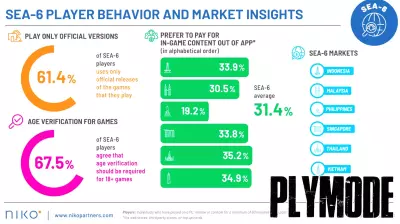
$7 billion in 2030: Opportunities in Southeast Asia’s Video Game MarketsSoutheast Asia`s video game industry is set for a major expansion over the next several years, with new projections pointing to a market value of $7 billion by 2030. The growth is being fueled by a...
August 5, 2026 - 02:04
Onimusha 2: Samurai’s Destiny Director Motohide Eshiro OnMotohide Eshiro, the director behind Capcom`s Onimusha 2: Samurai`s Destiny, recently opened up about the game`s unusual development path. In a new interview, he described how the project started...
August 4, 2026 - 08:18
Palworld Is Getting an Official MMO Before Pokémon Later This YearGarena and Pocketpair have officially unveiled Palworld Online, a mobile MMORPG that takes the creature-collecting survival phenomenon into a persistent, shared world. The announcement lands well...